
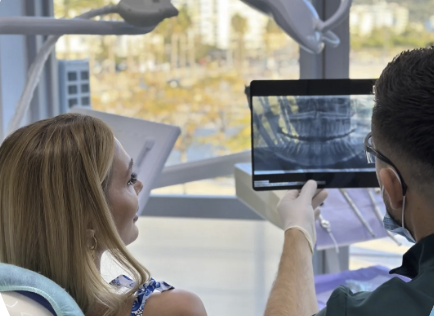
Dental Care in Albania
Understand Your Dental Options Before You Commit.
From implants and crowns to restorative dentistry and complex full-mouth treatment, receiving dental care abroad can involve significant decisions. American-Guided helps you organize what you already know, explore appropriate provider possibilities, and understand the questions worth asking before choosing a path forward.
You don't need to know exactly which procedure you need before starting the conversation.
Explore Dental Care
Different Goals. Different Treatment Possibilities.
Some people arrive knowing the exact procedure they've been quoted. Others simply know they have missing teeth, failing dental work, cosmetic concerns, discomfort, or a treatment estimate they want to better understand.
Dental Implants
For people exploring replacement of one or more missing teeth or implant-supported restorative options.
Crowns & Bridges
For people exploring restoration or replacement of damaged, compromised, or missing teeth.
Veneers & Cosmetic Dentistry
For people exploring changes to the appearance of their smile, where clinically appropriate.
Restorative Dentistry
For people exploring treatment involving damaged, worn, missing, or previously restored teeth.
Full-Mouth Reconstruction
For people facing more complex situations that may involve multiple teeth, multiple procedures, or staged treatment planning.
Second Opinion / Existing Proposal Review
For people who already have a treatment plan or estimate and want help understanding the proposal and the questions they may want to ask.
The appropriate treatment can only be determined by a qualified dental professional after appropriate clinical evaluation.
Start With What You Have
Your Existing Information Can Help Start the Conversation.
You do not need a perfectly organized dental file before contacting American-Guided. If you already have records, photographs, scans, estimates, or treatment recommendations, they may help provide useful context for preliminary conversations.
- Existing U.S. dental treatment estimates
- Written treatment plans
- Panoramic X-rays
- CBCT imaging, if already available
- Dental photographs
- Previous consultation notes
- Implant information from previous treatment, if available
- Relevant dental records
- Questions or concerns about an existing proposal
Don't have any of these yet? That's okay.
You can still begin by telling us what you're experiencing, what you're considering, and what you hope to understand.
Tell Us What You Already HaveTreatment Planning
The Same Goal Can Sometimes Lead to Different Proposals.
Complex dental care is not always a matter of choosing one universally identical treatment plan. Different qualified dentists may approach a case differently based on clinical findings, professional judgment, treatment philosophy, available information, materials, technology, and the patient's priorities.
- Current condition of the teeth and supporting structures
- Existing dental work
- Number and location of missing or compromised teeth
- Available diagnostic information
- Provider experience and treatment philosophy
- Restorative approach
- Materials being considered
- Laboratory relationships
- Technology used where relevant
- Number and timing of visits
- Recovery or healing periods
- Patient goals and priorities
- Findings discovered during an in-person examination
A different proposal is not automatically a better or worse proposal. The important question is understanding why it is different.
American-Guided can help clients organize proposals and identify questions worth asking, but does not determine which treatment is medically appropriate.
Before You Compare Prices
Make Sure You're Comparing the Same Thing.
Two dental proposals can have different prices because they may not actually include the same treatment, materials, number of visits, provisional work, laboratory components, or follow-up expectations.
Price makes more sense when you understand what the proposal actually includes.
Dental Implants
Implant Treatment Is a Plan, Not Just a Product.
People researching dental implants online often encounter simple advertised prices. In reality, implant treatment may involve several separate clinical and restorative considerations, depending on the individual case.
- Number and location of implants
- Implant system being considered
- Surgical and restorative responsibilities
- Existing bone and oral conditions as evaluated by a dentist
- Whether additional procedures are proposed
- Temporary teeth or provisional restorations
- Healing periods
- Final restorative materials
- Laboratory work
- Number of visits
- Expected follow-up
- Maintenance considerations
Only a qualified dental professional with appropriate clinical information can determine whether implant treatment is appropriate and what treatment may be required.
The Details Matter
Ask What's Behind the Finished Smile.
For restorative and cosmetic dental treatment, the finished result may involve much more than the appointment itself. Materials, laboratory work, provider experience, treatment planning, communication, and technology may all be relevant depending on the procedure.
Materials
Understanding what restorative materials are being proposed and why the provider considers them appropriate.
Technology
Imaging, digital planning, scanning, and other technologies may be relevant depending on the treatment and provider.
Laboratory
Crowns, bridges, veneers, implant restorations, and other prosthetic work may involve dental laboratory services, making communication and expectations worth understanding.
American-Guided does not prescribe materials or determine which technology or laboratory approach is clinically appropriate.
A Realistic Expectation
Preliminary Plans Can Change After an In-Person Examination.
Information shared before travel can help support preliminary discussions, but it cannot replace an in-person clinical examination. A dentist may identify findings after examination, updated imaging, or direct evaluation that were not apparent beforehand.
If a proposed treatment plan changes, the patient should understand:
- What changed
- Why it changed
- What new information was identified
- How the revised plan differs
- Whether the cost changes
- Whether the timeline changes
- What alternatives may exist
- What questions should be answered before proceeding
You should understand a revised proposal before agreeing to proceed.
Clinical recommendations remain the responsibility of the treating dentist. American-Guided can help with communication and understanding practical next steps but does not determine treatment.
Understanding Cost
A Lower Price Doesn't Tell the Whole Story.
Dental treatment in Albania may sometimes be priced differently from comparable treatment in the United States because providers operate within a different economic environment.
- Labor costs
- Commercial real-estate costs
- Administrative overhead
- General operating expenses
- Local laboratory economics
- Different local cost structures
Lower price does not automatically mean lower quality.
Lower price also does not guarantee equivalent quality.
The better comparison considers the treatment being proposed, provider qualifications and experience, materials where relevant, communication, facilities, expectations, and follow-up — not simply the headline price.
Our Approach
Not Every Dentist Is Appropriate for Every Case.
The relevant provider depends on the treatment being considered and the individual situation. American-Guided is not attempting to create the largest directory of Albanian dentists.
Learn About Our Standards- Verification of relevant professional credentials
- Applicable Albanian licensing or practice requirements
- Professional reputation
- Relevant education and experience
- Experience with the treatment being considered
- Communication and responsiveness
- Facilities and cleanliness
- Technology where relevant
- Materials where relevant
- Laboratory relationships where relevant
- Transparency of proposals
- English-speaking communication and international patient experience
- Follow-up expectations
- Overall patient experience
Beyond the Dental Chair
Treatment Timing and Travel Need to Work Together.
Receiving dental care abroad introduces practical considerations that may not exist when visiting a dentist near home.
Number of Visits
Some treatment may potentially require more than one visit depending on the treatment plan and healing requirements.
Length of Stay
Appointment scheduling, treatment stages, laboratory work, recovery, and provider recommendations can affect how long someone may need to remain in Albania.
Travel Timing
Flights should not be planned around assumptions about treatment timing before the relevant provider has clarified the anticipated schedule.
Accommodations
Location and convenience may matter when multiple appointments are anticipated.
Local Transportation
Understanding how you will travel between accommodations, appointments, airports, and other locations can reduce unnecessary stress.
Recovery
Some procedures may involve recovery considerations that should be discussed directly with the treating provider.
Follow-Up
Before proceeding, patients should understand what follow-up is anticipated and what to do if questions arise after returning home.
Planning Your Stay
Albania is part of the treatment plan, too.
Once your anticipated treatment schedule is clearer, we can help you understand the practical side of your stay — location, transportation, accommodations, and navigating Albania between appointments.
Explore DestinationsAmerican-Guided can assist with practical local guidance and coordination, but medical and dental instructions must come from the licensed treating professional.
Better Questions
Before You Commit, Understand the Details.
Understanding who performs each part of your treatment — surgical and restorative — helps clarify responsibilities and expectations. This is a question worth confirming directly with the provider before committing.
Experience with the specific treatment being considered may be relevant. Asking about the provider's relevant experience helps you understand whether the proposal reflects familiarity with your kind of case.
A proposal should make clear what treatment, materials, laboratory work, provisional restorations, and follow-up are included — and what may not be. Understanding the full scope helps you compare proposals accurately.
Treatment plans can change after an in-person examination reveals findings that were not apparent beforehand. Understanding what could change and why helps you prepare for that possibility rather than being surprised by it.
The number of visits depends on the treatment being proposed, healing requirements, and laboratory timelines. Understanding this early helps you plan travel and time away from home.
Length of stay depends on the treatment plan, healing periods, laboratory work, and provider recommendations. This should be clarified before you book travel so you can plan accordingly.
Restorative and cosmetic dental treatment may involve specific materials. Understanding what is being proposed and why the provider considers it appropriate helps you ask informed questions.
Crowns, bridges, veneers, implant restorations, and other prosthetic work may involve dental laboratory services. Understanding this helps set expectations for timing, quality, and communication.
Understanding anticipated follow-up — and what to do if questions arise after you return home — helps you plan for the full treatment journey, not just the time in Albania.
Before proceeding, it helps to understand what the provider communicates about aftercare, how questions are handled remotely, and what practical options exist if a concern arises after you return.
In many cases, speaking with the treating dentist before travel can help you understand the proposal, ask questions, and feel more confident. This is worth requesting where appropriate.
Depending on your case, the provider may request records, imaging, photographs, or other information. Confirming what to bring helps ensure productive appointments once you arrive.
Independent Patient Guidance
We're Here to Help You Navigate the Process — Not Practice Dentistry.
What We Help With
- Organizing available information
- Understanding preliminary proposals
- Identifying questions worth asking
- Exploring appropriate provider possibilities
- Facilitating communication
- Understanding practical next steps
- Preparing for Albania
- Local American-guided support
- Navigating practical considerations
- Understanding follow-up expectations
What We Don't Do
- Diagnose dental conditions
- Determine treatment
- Prescribe medication
- Perform procedures
- Guarantee outcomes
- Guarantee provider availability
- Guarantee savings
- Replace the dentist
- Provide emergency dental care
Licensed dental professionals remain solely responsible for examination, diagnosis, informed consent, treatment recommendations, procedures, and clinical care.
Start Where You Are
You Don't Need Everything Figured Out.
Tell Us What You're Considering
Tell us your goals, concerns, existing treatment recommendations, or simply what you're trying to understand.
Share What You Already Have
If available, share existing estimates, records, photographs, scans, or questions.
Understand the Next Step
American-Guided helps organize the information and determine the appropriate next step for exploring possibilities.
Confidence Before Commitment
Start With the Questions You Already Have.
Whether you already have a detailed treatment proposal or you're only beginning to explore dental care in Albania, you can start with what you know today.
No pressure. No clinic commitment. Confidence before commitment.